



President Obama Presents Plan To Upgrade America’s Infrastructure
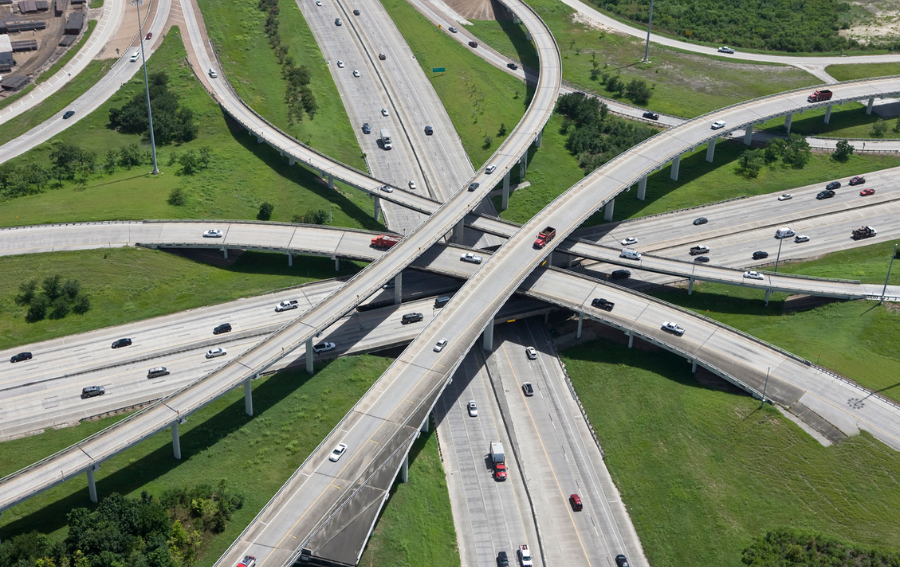


During Laborfest, a union-sponsored Labor Day rally held in Milwaukee, Wisconsin, President Obama announced a plan to spur the American Economy by investing in the country’s crumbling infrastructure. President Obama called for Congress to approve what has been dubbed the Transit Plan, which focuses on much-needed upgrades to the nation’s roads, rails, and runways. The Plan will cost $50 billion over 6 years, and establish a government-run bank to finance the transportation overhaul. President Obama and other White House officials are confident that the Plan could lead to job growth within a year.
President Obama’s address to the Wisconsin crowd on Labor Day was part of the upcoming campaign season. Two days after the Milwaukee rally, President Obama delivered a follow-up speech at the Cuyahoga Community College West Campus in Parma, Ohio, just outside of Cleveland. During his address, President Obama explained why the Plan is imperative for America to remain competitive in the global economy:
Now, there are still thousands of miles of railroads and railways and runways left to repair and improve. And engineers, economists, governors, mayors of every political stripe believe that if we want to compete in this global economy, we need to rebuild this vital infrastructure. There is no reason Europe or China should have the fastest trains or the most modern airports -– we want to put people to work building them right here in America.
This piggybacks what he said at the Labor Day rally, “I want America to have the best infrastructure in the world. We used to have the best infrastructure in the world. We can have it again. We are going to make it happen.”
Transit Plan Details
Some of the major upgrades included in the Plan are the repair of 150,000 miles of road, laying 4,000 miles of rail track and the restoration of 150 miles of runways. The Plan also calls for modernization of the air traffic control system in order to reduce delays. According to a White House Fact Sheet about the Plan, if the Plan is approved by Congress, it is expected to create 2 million direct and indirect jobs as well as stimulate $35 billion per year in new economic activity.
The goals of the Plan are to revitalize the transportation infrastructure, improve public transportation and transportation planning and to safeguard transportation from terrorism.
The benefits foreseen through the revitalization of the transportation infrastructure are:
• Stronger core infrastructure which will make America more competitive on a global scale
• Creation of new jobs through a national infrastructure investment
• Improved and modernized air traffic control which will mean fewer delays at airports
• Stronger airline safety and regulations to restore competence, independence and credibility to the Federal Aviation Administration
• Increased funding for Amtrak, which is the only form of reliable transportation in some parts of the country
• Development of high-speed freight and passenger rail, which will have significant environmental and urban planning advantages
• Stronger air transportation in underserved areas, critical for their economic development
• Modernized water infrastructure, to end economic stagnation in affected areas
• Improved transportation, which will provide greater access to jobs to commuters living in outlying areas who have been forced to spend a large portion of their income getting to and from work
The potential benefits from improved public transportation and transportation planning are:
• Increased investment in public transportation, reducing individual commute time and benefitting both the environment and public health
• Creation of greater incentives for using public transportation
• Stronger metropolitan planning to reduce traffic congestion, allowing communities to better serve their residents
• Requiring states to plan for energy conservation, critical in reducing our collective dependence on non-renewable resources
Lastly, the benefits of safeguarding transportation from terrorism are:
• Increased protection of our transportation infrastructure from terrorists, ensuring that any high-risk areas are prepared for both natural and man-made disasters
• Stepped-up airport security, which will make air travel safer and more secure by doing away with ineffective, and often inconvenient methods of screening
• Safer mass public transportation, critical given that on the average weekday, Americans take 34 million trips on public transportation to get to work, school, or wherever they need to go
Political Conflict
Despite optimism about improved infrastructure and increased jobs, the Plan is controversial. The Democrats who support the Plan are urging increased government spending, while many Republicans are promoting tax cuts given the upcoming election. Additionally, not all Democrats support Obama’s proposal. In fact, a top campaign aide to a Democratic congressional candidate running in the Northeast stated, “Nothing translates better to jobs than projects on infrastructure, but . . . when we only have eight weeks until the election . . . I don’t think anybody who’s up for reelection really wants to try to sell this.”
As found in a Wall Street Journal article by Gary Fields, one of the most prominent opponents of the Plan is House Republican Leader John Boehner of Ohio who has stated, “If we’ve learned anything from the past 18 months, it’s that we can’t spend our way to prosperity,” referring to the Stimulus. Mitch McConnell of Kentucky, Senate Minority Leader, said: “A last-minute, cobbled-together stimulus bill with more than $50 billion in new tax hikes will not reverse the complete lack of confidence Americans have in Washington Democrats’ ability to help this economy.”
Proponents of the Plan include Pennsylvania Governor Edward G. Rendell of Pennsylvania, Governor Arnold Schwarzenegger of California and Michael R. Bloomberg, mayor of New York City, who would like to see the proposed national bank actually fund a broader array of developments, including water and clean energy projects. In expressing his support, Governor Rendell, co-chairman of Building America’s Future , stated:
We applaud President Obama for announcing a bold course to rebuild America’s infrastructure during these difficult economic times. A reformed, robust transportation infrastructure program will speed needed repairs for our crumbling assets, eliminate time Americans waste in traffic, and establish a true high-speed passenger rail network. We are a nation of innovators and builders, and the President’s announcement will mean that thousands of Americans will go back to work to repair and rebuild our nation’s infrastructure.
President Obama is confident that the passage of the Plan would not only improve the nation’s infrastructure and create jobs, but also lead to an economic overhaul in the form of more efficient use of American tax dollars:
It will change the way Washington spends your tax dollars, reforming the haphazard and patchwork way we fund and maintain our infrastructure to focus less on wasteful earmarks and outdated formulas, and more on competition and innovation that gives us the best bang for the buck.
Mr. Fields also noted in the Wall Street Journal article that despite the significant potential benefits of the Plan, it is unlikely that the House will take up the measure before the polls close:
There will be little time to address the plan this year. Once Congress returns from its August break next week, it will have only about four weeks before it breaks again for midterm election campaigns. Lawmakers in the coming weeks are expected to focus on legislation that would boost small-business lending.
Although it could be some time before the Plan reaches Congress for a decision, we will continue to monitor and report on any developments with Obama’s Transit Plan.
