Documents Worth Thinking About for College Students
August 20, 2026 /
Publications


When a child turns 18 and goes off to college, families often run into problems because the student is legally an adult—even if the parents are paying tuition, providing health insurance or handling most of the student’s finances. Some of the most common issues fall into these areas:
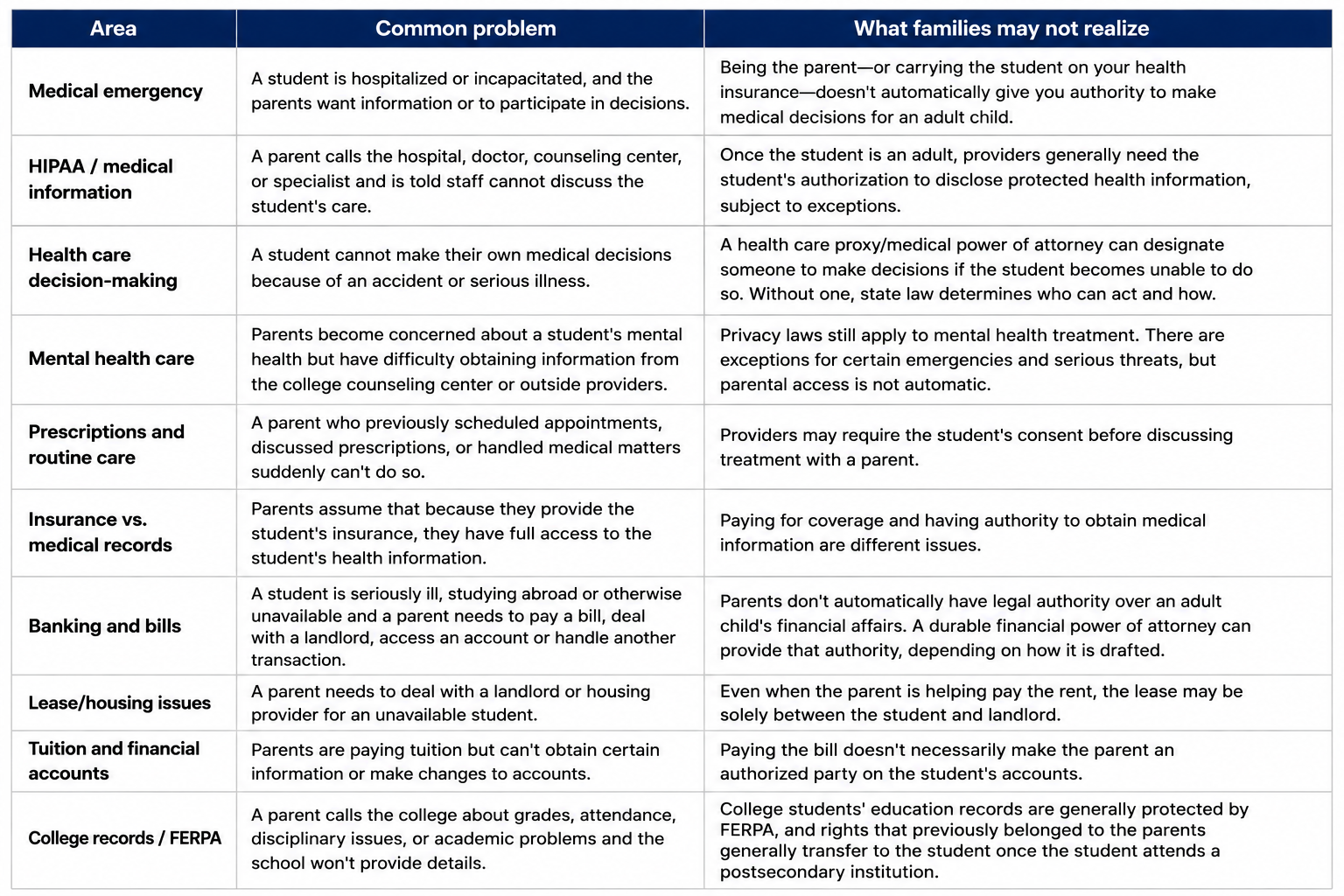
To help with these issues, parents and students may consider completing the following documents:
- Providing HIPAA authorization. A HIPAA authorization can allow a student to designate a parent, guardian or another trusted person to receive certain health information from medical providers. This can be particularly helpful if the student is hospitalized or a parent needs to communicate with providers about the student’s care. The authorization can specify what information may be shared and with whom.
- Naming a health care proxy or health care power of attorney. A health care proxy or health care power of attorney allows a student to designate a parent, guardian or another trusted person to make medical decisions on their behalf if they become unable to make those decisions themselves. This is different from a HIPAA authorization, which generally addresses access to medical information rather than decision-making authority.
- Executing a durable power of attorney. A durable power of attorney can authorize a parent, guardian or another trusted person to handle certain financial and legal matters on the student’s behalf. Depending on how the document is drafted, this might include managing bank accounts, paying bills, handling insurance matters, signing documents or addressing other financial issues if the student is unable or unavailable to do so.
- Completing a FERPA authorization or the school’s applicable release process. Once a student attends a postsecondary institution, parents generally do not have automatic access to the student’s education records, even if they are paying tuition. A FERPA authorization or school-specific release may allow the student to give a parent or guardian access to certain academic, financial or other education records. Because procedures vary by institution, families should check the college or university’s requirements.
If you have any questions about how to complete these forms or more details about how they can help your family, reach out to our Trusts & Estates Group.