

Why 3D Construction Printing is Gaining Ground


By: Jason Copley, Michael Schwartz and Nathan Marinkovich
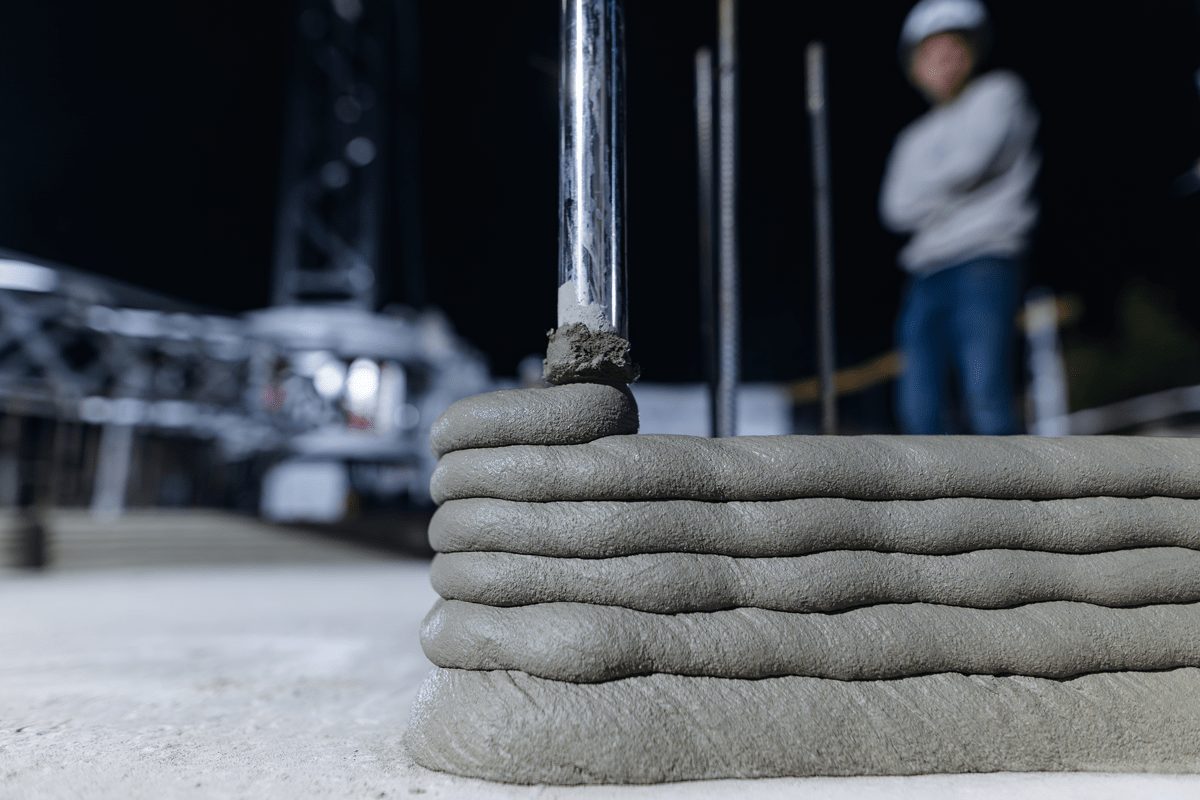
The construction industry continues to navigate a transformative period involving the integration of smart technology, cloud computing and additive manufacturing (commonly known as 3D construction printing (“3DCP”).
Once relegated to experimental prototypes, 3DCP has continued its transition into an evolving construction technology aimed at solving a myriad of issues, including the global housing crisis, labor shortages, and environmental sustainability.
Most credible sources continue to project aggressive growth in the 3DCP market. Mordor Intelligence, a recognized, ISO-certified market research firm, projects that the 3DCP market will rise from a value of $3.34 billion (2026) to $15.29 billion by 2031, maintaining a compound annual growth rate of 35.6%.
A primary trend driving this growth is the shift from single-home to large-scale residential communities. For example, in Georgetown, Texas, the Wolf Ranch development—a partnership between Lennar, one of the largest homebuilders in the United States, and ICON, a 3D technology company—recently completed 100 homes, with approximately 75% of the inventory sold by early 2025.
These homes, starting just under $400,000, utilize solar power and provide significant energy savings, with some residents reporting monthly electric bills as low as $26. Following this success, Lennar and ICON are currently in the planning stages of a second community of 200 homes.
Significant Hurdles to Address
High capital expenditure for large-format printers remains a significant growth restraint, contributing to several high-profile bankruptcies for 3DCP companies between 2024 and 2026, including Black Buffalo 3D, Desktop Metal, and BCN3D. Experts have referred to this industry development as a “repricing,” where capital flows have become selective and prioritize firms with proven deployment paths and government partnerships.
Even companies who have enjoyed success, including ICON which was last valued at approximately $2 billion, recently laid off 114 workers (or about 25% of its staff) in early 2025, with additional layoffs expected (per TechCrunch). ICON stated that these moves were necessary to align with market conditions, improve efficiency and focus on high-priority growth initiatives like the Phoenix 3D printing system—a multi-story robotic-arc-mounted 3D printer system designed to print entire building envelopes, including foundations and roofs, in one continuous process.
This system purportedly aims to lower construction costs to $99 per square foot, which could significantly expand the feasibility of affordable housing communities using 3DCP methods.
3DCP as an Answer to Affordable Housing
The residential segment of 3DCP is increasingly focused on affordable housing. For example, in Houston, Texas, the Zuri Gardens project is currently developing 80 detached homes specifically for lower income buyers, with prices starting at $280,000 and the potential for up to $125,000 in city-funded down payment assistance.
These homes utilize the “mass wall” effect, where printed concrete walls are filled after the concrete and MEP work is completed, with concrete foam to create a solid, insulated structure that regulates indoor temperatures and resists mold, flooding, and extreme heat. This resilience has made 3DCP structures increasingly attractive to insurance underwriters for the potential to offer a lower-risk asset in disaster-prone regions.
The Trend Toward Collaborative Business Models
To facilitate industry-wide adoption, firms are moving toward partnership or joint ventures models. One example is the partnership between ICON and Lennar for the Wolf Ranch development. Another is Alquist 3D, who recently announced a partnership with Walmart for the largest deployment of printed commercial structures in the U.S.
Unlike other 3DCP companies, Alquist has developed a model where it functions essentially as a tech company that leases or sells proprietary robotic systems to general contractors while providing the necessary software and training.
Similarly, in August 2025, the first 3D-printed “tiny house” was built in the Luxembourg municipality of Niederanven by a Czech joint venture between ICE Industrial Services and HSF System. This collaboration is focused on expanding 3DCP into the European luxury and “tiny house” markets. This house has a useable area of 47 m², or 505.904 square feet, and was printed in less than 28 hours of net printing time.
Built in one of the most expensive countries in Europe, the cost of $320,000 Euros, or approximately $378,000 U.S. dollars, is roughly one-third less than the cost of conventional development.
Material Innovations and Environmental Impact
Current 3DCP industry trends also emphasize low-carbon binders and waste upcycling to mitigate environmental impacts and attempt to bypass supply-chain volatility (e.g., cement tariffs). Key material innovations include:
- Green Cement – Projects like Zuri Gardens utilize the near-zero-carbon PozzoSlag, a pozzolanic cement made from upcycled fly ash that requires no Portland cement and is manufactured at room temperature.
Alternative Reinforcement – Scientists at Penn State and MIT are developing methods to embed cables or mesh directly into concrete filaments during printing. This allows for the construction of horizontal slabs and roof structures without traditional formwork, which can account for 40% of concrete construction costs.
Bio-Based Printing Materials – Recent breakthroughs in “Bio-3D Printing” for construction involve using mycelium (fungus) or hempcrete as printing filaments. These materials offer superior carbon sequestration properties compared to concrete and are being piloted in Europe for temporary structures and sustainable insulation.
Leaders of 3DCP Outside of the U.S.
Housing projects emerging outside of the U.S. include the DREIHAUS project in Heidelberg, Germany, which consists of 21 residential units. Meanwhile, in Denmark, the Skovsporet project was completed in October 2025, which consists of 36 student apartments and it considered Europe’s largest 3D-printed housing project to date.
In late 2025, China inaugurated the Xiong’an Wings cultural center which employed 3D-printed plastic panels and digital laser scanning to achieve complex architectural curves.
Meanwhile, in Kenya, the Mvule Gardens housing project reached a milestone in 2026 as the first 3D-printed development to earn World Bank sustainability certification.
Dubai has also established itself as a global leader in 3DCP through the Dubai 3D Printing Strategy 2030, which mandates that 25% of its buildings be 3D printed by 2030. To support this vision, Dubai became the first to implement a certification system for 3D-printed construction to ensure material quality and streamline operational procedures.
The 3DCP industry continues to navigate its way through a phase of tempered growth. While financial volatility has claimed some early innovators, the successful delivery of mass-scale residential communities like Wolf Ranch and Zuri Garden, in addition to the DREIHAUS project and Dubai’s aggressive approach toward 3DCP, further demonstrates that the technology is primed to see further improvement and cost savings for the consumer market.
Harmonizing global building codes, adopting low-carbon materials, and integrating AI-driven technology will likely shape the sector’s future and support structural reliability at scale.