What’s New
We hope that you had a productive start to the new year. In this issue, you will learn about New York’s strong enforcement of no-damages-for-delay provisions, how to preserve the priority of your judgments in New Jersey, and how to secure and protect your home-field advantage in litigation. Don’t miss the Q&A with our newly promoted partners, Daniel Fierstein, Kathleen Morley, and Jackson Nichols. Please reach out if you have any questions or have topic suggestions for future issues.
Wishing you a happy and healthy spring!
Christopher W. Sexton, Co-Editor-in-Chief
Sydney Pierce, Co-Editor-in-Chief
Cohen Seglias Promotes Three Construction Attorneys to Partners

We are excited to announce the promotions of Daniel Fierstein, Kathleen Morley, and Jackson Nichols to the firm’s partnership, effective January 1, 2021. Dan, Kathleen, and Jackson are all members of the firm’s Construction Group. Dan and Kathleen are located in the Philadelphia office, and Jackson sits in the Washington, DC office.
Cohen Seglias managing partner George Pallas commented, “On behalf of everyone at the firm, I sincerely congratulate Dan, Kathleen, and Jackson on this significant achievement. In addition to being outstanding attorneys, they have all shown tremendous dedication to the strength and growth of our firm. We look forward to seeing them excel even further in this next step of their careers.”
Daniel E. Fierstein joined Cohen Seglias in 2009. He has a diverse and national construction industry client base, representing all tiers of the industry. Dan’s clients call upon him for advice throughout a project’s lifecycle to resolve contract questions, payment disputes, scope of work/change order disputes, delay/acceleration/inefficiency claims, mechanics’ liens, and payment and performance bond claims. He has extensive experience in prosecuting and defending major construction disputes in various fora, including state and federal courts, arbitrations, and mediations.
Kathleen M. Morley also joined the firm in 2009. She concentrates her practice in construction litigation, assisting industry clients with a broad range of matters, including contract disputes, bid protests, injunctions, mechanics’ liens, and bond claims, with substantial experience handling large, complex construction disputes in Pennsylvania, New Jersey, and New York. Clients turn to Kathleen for counsel on issues relating to contract negotiation, enforcement, breach, and termination, as well as changes, defects, delays, and inefficiencies on both public and private projects.
Jackson S. Nichols joined Cohen Seglias in 2015. He advises general contractors, subcontractors, sureties, owners, and other construction industry entities in navigating complex commercial disputes that arise during projects. Jackson regularly prosecutes and defends claims involving mechanics’ liens, bond claims, Miller Act claims, and arbitration disputes, among others. He represents clients in multiple jurisdictions and fora, including state and federal court, federal administrative proceedings, and alternative dispute resolution.
Announcing Our Crime Victims’ Rights Group
In many criminal cases, victims of crimes are afforded rights under the Crime Victims’ Rights Act and its state law equivalents, many of which may not be obvious to victims. Our new Crime Victims’ Rights Group, led by Julie Grohovsky, helps victims assert these rights in criminal proceedings, advocating for victims at every stage and ensuring their voices are heard and rights respected. Whether it is working with the government to ensure clients receive notice of court dates or helping an individual prepare to testify, our attorneys know how to navigate complicated legal situations.
We understand that crime victims are more than just witnesses in legal proceedings and that not all crime victims are alike in terms of how they would like their case to be handled. Our attorneys previously served as federal and state prosecutors and law enforcement officers who prosecuted criminals and helped victims navigate the criminal justice system. Utilizing this experience, our Group helps victims understand how the various legal systems operate and advises them on how to make those systems work best for them.
Cohen Seglias Moves Philadelphia Office to 1600 Market, Expanding its Center City Presence
After 15 years at 30 South 17th Street, we are excited to announce our move to 1600 Market Street, where we occupy all of the 32nd floor and half of the 31st floor. Our new space of 40,000 sq. ft., designed by L2Partridge and built by IMC Construction, accommodates our growing Philadelphia presence.
1600 Market Street
32nd Floor
Philadelphia, PA 19103

Congratulations to Paul S. Thaler and Steven M. Williams!
Congratulations to Paul Thaler and Steve Williams, who were named shareholders and joined the firm’s board of directors! Both Paul and Steve have made significant contributions to Cohen Seglias’ success and growth over the years.
 Paul S. Thaler is the managing partner of our DC office. He has more than 25 years of experience conducting and representing hundreds of clients in internal investigations on college and university campuses, giving him a deep understanding of the unique challenges faced when dealing with higher education institutions. Paul is nationally known for his work in scientific misconduct matters and represents both scientists and institutions across the United States in matters involving allegations of plagiarism, fabrication, or falsification of data in the context of scientific research supported by federal funds.
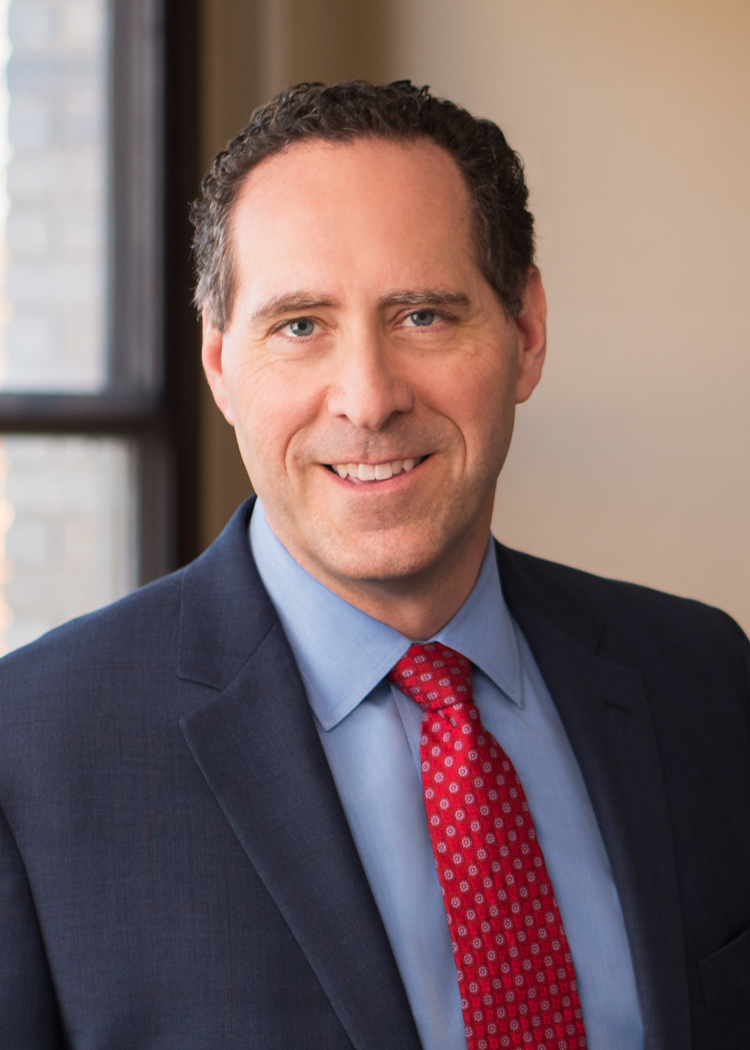 Steven M. Williams is the firm’s administrative partner, responsible for internal legal operations. He provides a full range of legal services to help his clients avoid and resolve legal problems and maximize the success of their businesses. Steve’s practice covers a swath of practice areas, including commercial litigation, real estate, landlord and tenant law, condominium and homeowner law, employment law, construction, and business and corporate law. A large portion of his practice is devoted to helping clients resolve real estate disputes, including landlord and tenant matters, fair housing issues, sale-purchase issues, and licensing matters.
First in Time is Not First in Right for New Jersey Judgments
 A harsh reality in any business, including construction, is that there will be people who owe you money but do not have it. In general, a simple collection action can be brought against these individuals to obtain a judgment that can be executed against their property or recorded as a lien against a future sale. In most states, the priority of the judgments occurs in the order in which they are recorded, the so-called rule of “first in time, first in right.” This is not the rule, however, in New Jersey.
In New Jersey, merely recording a judgment is insufficient to preserve the creditor’s lien priority. A typical course of action for the creditor is to simply record the judgment as a lien and then wait for the debtor’s business to generate assets to pay the judgment. However, that strategy can backfire under New Jersey law, especially if the debtor winds up filing for bankruptcy. Rather, to preserve your judgment priority in New Jersey, you must be sure to take action to file and to serve a writ of execution on the debtor’s personal property and real property.
Like most states, to affect judgment lien rights in New Jersey, a creditor must record its judgment with the Clerk of the Superior Court. This action creates a lien on all real property owned by the debtor within the entire state. The reason for this policy is that the judgment, after the clerk records it, serves as constructive notice to subsequent purchasers, encumbrancers, and others that there is a judgment lien on the title of the affected property.
However, unlike most states, in New Jersey, the priority among judgment creditors is determined by the order of their levies of execution. Moreover, “execution is accomplished only after the creditor delivers the writ to the sheriff and the sheriff actually levies upon the debtor’s property.” Party Parrot, Inc. v. Birthdays & Holidays, Inc. As the Appellate Division put simply in a recent opinion in B.B. v. Mell, “the creditor who levies first has priority over all nonlevying judgment creditors.” This priority is with respect to all of the debtor’s property and not just the levied property.
This departure from the mainstream of collections law invites particular peril to judgment creditors in the context of bankruptcy. Under section 544 of the U.S. Bankruptcy Code, the trustee of the bankruptcy estate has priority over a creditor that obtains either a judgment-lien when bankruptcy is filed or “an execution against the debtor that is returned unsatisfied at such time.” This is referred to as the trustee’s “strong-arm” power against unperfected judgment creditors. Therefore, in New Jersey, because a judgment is not perfected until it is executed upon, the trustee can “strong-arm” all creditors who have not executed on their judgments before the bankruptcy date. The trustee holds this “strong-arm” power even over creditors who already recorded their judgment liens with the Clerk of the Superior Court before the debtor filed for bankruptcy.
Moreover, to maintain a priority position over other judgment creditors or the bankruptcy trustee, creditors in New Jersey must execute against both the debtor’s real estate and its personal property. New Jersey law actually requires that judgment creditors execute upon a debtor’s personal property before they may attempt to execute upon its real estate. Several courts have observed that N.J.S.A. 2A:17–1 “clearly and unequivocally expresses the legislative mandate” that the sheriff must first levy upon and sell the debtor’s goods before it may sell the debtor’s real estate. Sklar v. Cont’l Cas. Co. (In re Mariano). This principle is also stated in the New Jersey Rules of Court, which require that “execution shall be made out of the judgment debtor’s personal property before the judgment-creditor may proceed to sale of the debtor’s real property.” R. 4:59-1(d).
In accordance with this principle, when a creditor has filed and served a writ of execution against only real property, the trustee can use its strong-arm power to avoid the creditor’s judgment lien and take priority, based on the creditor’s failure to exhaust its remedies against the debtor’s personal property. In In re Mariano, the court declined to vacate a sheriff’s sale of a debtor’s real estate only because the trustee failed to show that the judgment creditor had not first tried to locate the debtor’s personal property. As the court observed, New Jersey law requires creditors to “make a good faith attempt to ascertain the location” of the debtor’s personal property before executing upon its real estate. The Mariano court implied that, had the trustee made that showing, it would have invalidated the sale of the debtor’s real estate, and the proceeds would have been “clawed back” into the bankruptcy estate.
In the recent case In re: Hillesland, a bankruptcy trustee successfully invalidated a judgment lien on that very basis. In Hillesland, the debtor did not answer the judgment creditor’s requests for information regarding the location and value of the debtor’s personal property and refused to allow the sheriff entry onto his property to take an inventory of goods. The creditor filed a writ of execution directing the sheriff first to sell the debtor’s personal property and then to seek what remained of the judgment from the debtor’s real estate. The debtor then filed for bankruptcy and revealed that he owned personal property.
The court in Hillesland held that the bankruptcy trustee had priority over the creditor’s claims because the creditor had not properly executed on the debtor’s property. Specifically, the court found that a creditor cannot execute upon a judgment debtor’s personal property and real property simultaneously and that reliance upon a debtor’s non-answers to discovery requests was insufficient to constitute a “good faith attempt to ascertain the location” of the debtor’s assets. The Hillesland court distinguished the facts before it from those presented in Mariano by observing that the creditor in Mariano had not relied solely upon the debtor’s non-answers to discovery about personal property but also had “commission[ed] two investigative reports.” This additional effort by the creditor in Mariano rendered its search for the debtor’s personal property as one conducted “in good faith.”
The decision in Hillesland provides a warning to creditors who do not take steps to preserve the priority of their liens against a New Jersey debtor’s property. But, less ominously, it also guides what must be done to do so. The statutes, Rules of Court, and Hillesland, taken together, show that a judgment creditor must take the following steps to preserve the priority of a judgment lien:
- Conduct an active search to locate personal property of the debtor, even if the creditor does not answer discovery requests;
- Record the judgment with the clerk of Superior Court to effectuate a state-wide lien on the debtor’s real property;
- File and serve a writ of execution against the debtor’s personal property;
- File and serve a writ of execution against the debtor’s real property.
By taking these steps, a creditor can ensure that the priority of its judgment is preserved if its debtor in New Jersey files for bankruptcy.
Securing and Protecting Home-Field Advantage in Construction Litigation
 In construction litigation, home-field advantage is a concept that arises quite frequently. Certainly, in the sports world where we are used to hearing this term, home-field advantage is a controversial phenomenon. But, in the legal realm, the concept is a bit more intuitive: it is much more cost-effective for a party to send witnesses, perform depositions, and otherwise try a case in a geographically convenient location than it would be to do so elsewhere. Likewise, it can be advantageous to have attorneys and courts that are more familiar with the substantive law, procedures, and judges of their respective “home” jurisdiction.
Large construction disputes often involve geographically diverse parties with multiple contracts and entities involved. As a result, it is not uncommon for issues to arise concerning where a legal action should be filed or which state’s law will apply. It may seem natural to assume that litigation should take place in the same locale as the project at issue, but that is not always the case. Oftentimes, out-of-state parties contractually require other parties to waive that right—understandably, and for the reasons explained above, they want to litigate in a convenient location. That said, it does not always make sense for parties to litigate a dispute in New York City for a project that occurred in Philadelphia simply because a contractor required that venue in its contract.
State legislatures have recognized that issue and, in response, have enacted prompt payment statutes. Among other things, prompt payment statutes in a number of jurisdictions invalidate contract terms that require disputes on in-state projects to be litigated in other states. That certainly holds true in the Commonwealth of Pennsylvania, which has a private prompt pay statute known as the Contractor and Subcontractor Payment Act (CASPA) and a public prompt pay statute in the Commonwealth Procurement Code. Both of these statutes require that all disputes arising out of construction projects performed in the Commonwealth be litigated in Pennsylvania and that Pennsylvania law applies.
Although those may seem like simple and straightforward rules, like many legal principles, there are pitfalls involved in their application. In actions brought in Pennsylvania at the state-court level, the statutory language of CASPA or the Procurement Code controls. If litigation arises in connection with an in-state construction project, and one party asserts that the parties contractually agreed to litigate the matter outside of the Commonwealth, such a contractual provision will be held unenforceable as against statutory law and will not be given effect. In essence, the action will stay with that state court and the dispute will be litigated in Pennsylvania.
But, in actions brought in or removed to federal court, the analysis changes in a major way. As some brief background information, federal courts differentiate between substantive law and procedural law for purposes of determining what law to apply to a given case. Typically, unless a federal statute is involved, a federal court must apply state substantive law. An example of a substantive law would be state law on fraud, which may vary widely in composition depending on the jurisdiction. The law on fraud in Pennsylvania may differ from the law on fraud in New York. However, when it comes to procedural questions in federal court, federal law controls. This concept, known to keep first-year law students up at night, is called the “Erie Doctrine.”
As that applies here, it is well-settled that forum selection and choice of law issues are not substantive in nature; rather, they govern the procedure that litigation will follow. Federal law views such contractual provisions favorably and, absent extraordinary circumstances, federal courts will give such provisions full effect. As a result, state contractor payment statutes such as CASPA or the Procurement Code, which prohibit certain forum selection clauses, are in direct conflict with federal procedural law. In other words, federal law is in favor of these provisions, while state prompt payment statutes often prohibit these provisions.
Though the Erie Doctrine may seem unfair or something that was not contemplated by the contracting parties, it is grounded in the Constitution’s Supremacy Clause. Federal law is the “supreme Law of the Land,” and, as such, takes priority over any conflicting state laws, including state-enacted prompt payment statutes. Thus, if litigation is filed in or removed to federal court in connection with an in-state construction project, and the parties agreed to litigate the matter elsewhere, absent extraordinary circumstances, such a contractual provision will be enforced and neither CASPA nor the Procurement Code will have any effect. This is likely the case with other state prompt payment statutes as well.
This is an important issue in construction litigation, and something that contractors and subcontractors should be cognizant of. As detailed above, it is much more difficult and costly for a party to litigate in a far-away jurisdiction than it would be in a convenient location. Contractual language and even state law will not always be applied in the way it is written and it can substantially impact bargaining power during the course of a dispute. If you want to hang on to that home-field advantage in Pennsylvania, contractors and subcontractors alike should insist that their agreements either specify Pennsylvania or the place where the project is located as the jurisdiction for litigation over any disputes.
New York’s Strong Enforcement of No-Damages-for-Delay Provisions
 A common clause in many New York construction contracts is a “no-damage-for-delay” exculpatory provision, providing, in sum, that delay damages are not compensable and that if you are delayed, then you are only entitled to a time extension (at most). Of course, these terms are sometimes offset with certain compensable time impact terms, but their thrust is nonetheless important. Although circumstances vary, and the specific terms of a given contract are always of utmost importance, there are factors you need to consider, whether you are a general contractor or subcontractor.
Some states, like New Jersey, given its strong stance on the implied covenant of good faith and fair dealing, take a more equitable view of no-damage-for-delay provisions and even provide limitations as to their enforcement in the public and private arenas. This, however, is not the case in New York, which has a much stricter approach. As recently as last year, New York courts enforced the literal terms of broad no-damage-for-delay provisions in construction contracts. As a result, pursuant to New York law, delay damage claims can be dismissed even prior to discovery taking place. In other words, courts can dispose of delay damage claims prior to the parties’ exchange of documents or taking of depositions, despite the fact that these claims can be complex and valuable.
New York’s strict approach dates back to the 1980s, with the landmark case of Corinno Civetta Constr. Corp. v. City of New York. The highest state court in New York—the New York Court of Appeals—held that broad no-damage-for-delay provisions are enforceable (as they are not against public policy) and should be enforced according to their terms. This set the stage for several decades of strict enforcement of these exculpatory provisions.
Over time, New York courts have gone further in reaffirming enforcement of these provisions by finding larger categories of damages to constitute “delay damage.” Courts have found delay damages to include acceleration costs, increased labor costs, extended general conditions, and even delayed access (with some courts holding even several months delayed access would be captured by the exculpatory provision). Even delays caused by design changes have been found to be a type of “delay damage” in certain circumstances.
This does not mean that all hope is lost. The Corinno Court and subsequent holdings recognize that there are four exceptions to enforcing broad no-damages-for-delay provisions, albeit while simultaneously holding that such exceptions are “narrowly” construed. These exceptions include:
- Delays that were uncontemplated
- Delays caused by a breach of a fundamental obligation under the contract
- Delays that are so unreasonable they amount to the abandonment of the contract
- Delays due to bad faith, fraud, or willful and/or grossly negligent conduct
The exceptions for the abandonment of the contract and for bad faith, fraud, or gross negligence are relatively self-explanatory, though these exceptions are not as common and therefore not applied often by courts.
The more commonly asserted exceptions are due to uncontemplated delays or breach of fundamental contractual obligations. Breach of a fundamental obligation is most commonly interpreted as a breach of a material and explicit provision of the contract that goes to the heart of the agreement. This can be something like a complete failure to provide a schedule (if a schedule was required pursuant to contract). However, application by the courts is not uniform, and there is limited guidance available.
The most commonly asserted exception is for uncontemplated delays. While this may seem like a “catch-all,” it has been interpreted narrowly, as well. Courts have interpreted the exception to mean that if a “type” of delay damage is contemplated by the subject contract, then the exception will not apply. Courts will look for either general categories and/or specific items being “contemplated” (i.e., discussed) in the contract such that a (sub)contractor could reasonably expect it to be a source of delay. When a court makes this assessment, it may search the agreement at varying levels to determine what was contemplated. This can be subjective depending on the court and even the judge, thus leading to inconsistent application where contractors ought to err on the side of prudence.
Notably, there is also an exception to the exception. Courts have used the umbrella concept of “poor planning and inept administration” as a “catch all to the catch all.” In other words, the courts find certain delays as being so “routine” and/or “garden variety” that they are considered to be impliedly “contemplated” by the contract due to their common nature. This is true even where the subject contract does not discuss the specific source or general category of a source of delay damage. Thus, even if uncontemplated in the contract at issue, the no-damage-for-delay provision may still be enforced if it is a “typical” or “expectable” source of delay.
Ideally, over time courts will begin to realize the need for pragmatic parameters in enforcing these provisions. This is because, while “contingencies” to a modest degree can be built into contracts, such strict claim preclusion reasonably should not be considered the “parties’ intent.” Yet, at present, the courts in New York noticeably and materially tend to stricter enforcement. Thus, contractors and subcontractors in New York should try to mitigate the risks of no-delay-damage provision enforcement when delay damages (in the broadest sense) are first recognized on a given project and should work to preserve these claims as best as possible throughout the duration of their scope..
In sum, no-damage-for-delay provisions may be common in construction contracts, but they nonetheless present palpable risks. Accordingly, contractors and subcontractors need to remain cognizant of this, balance their risks appropriately, and be sure to understand any applicable notice and/or time impact provisions that could otherwise allow for a delay claim to stand and potentially mitigate these concerns.
Spring Cleaning: Review Your Contracts to Account for Ongoing COVID-19 Concerns
 At this point, avoiding the cliché is, well, unavoidable. We are now past the one-year mark of the COVID-19 pandemic and much has changed. You don’t need a construction attorney to tell you so. While things have changed, we all must move forward in the “new normal,” including those in construction.
As we move into the second quarter of 2021, it’s an opportune time to look at where we have been and where we are going. To do so, you must review your contracts and construction relationships both retrospectively and prospectively.
At the onset of the pandemic in March 2020, construction largely came grinding to a halt. Many companies turned to their contracts to see what relief, if any, they had. Construction shutdowns meant lost time and money. One provision that was helpful is known as a force majeure clause, which provides a party relief when the unforeseen—such as a global pandemic—occurs.
Now, it’s difficult to argue that the COVID-19 pandemic is unforeseen going forward. So, what can construction companies do to still protect themselves?
First, companies should review their contracts to ensure that they have accounted for the ongoing pandemic. Provisions related to delay, stoppages, and safety are obvious choices. However, companies should also analyze what their contracts say, if anything, about changes in the current situation that could occur due to future strains, variants, or other complications. Should future, widespread outbreaks occur from COVID-19, or other infectious diseases, you should make sure that you are protected. We suggest revising all force majeure clauses to specifically reference pandemics, epidemics, and related governmental orders to remove all question that the repercussions of future strains are not foreseeable.
Additionally, companies should pay special attention to provisions that address material escalation, material delays, or the inability to procure certain materials. As shelved projects take off alongside ongoing work, material availability can be scarce, so it is important to anticipate the impacts that these complications can have in finishing your work or the overall project’s completion.
Furthermore, many may face a backlog of work as a result of shutdowns or delayed starts. Once-promised start and completion dates may not be possible. Be mindful of the time and monetary impacts and protect yourself in these instances too.
While we cannot help but reflect on the past year, it’s also important to look forward and be prepared by using what we have learned from the difficulties that we have overcome.
As always, if you have specific questions about your contracts or projects, do not hesitate to reach out.
Q&A with Cohen Seglias’ Three New Construction Partners
 Daniel Fierstein, Kathleen Morley, and Jackson Nichols were recently promoted to the firm’s partnership. Our newsletter team sat down with them to discuss their practices.
Q: Tell us a little about your practice and the services that you provide to your clients.
Dan: I devote most of my practice to the firm’s construction industry clients. Often, that means getting involved at the end of the project life cycle—prosecuting and/or defending claims relating to contract balance, scope disputes, and delay/acceleration/labor inefficiency. I also help my clients at earlier stages of a construction project, including contract review and formation and day-to-day project management. That can mean helping clients send the right letters and notices during the project to get out in front of issues before they become problematic and boil over at the end.
Kathleen: I have represented contractors, subcontractors, suppliers, and other industry members in construction-related disputes and litigation for over a decade. I counsel clients on all aspects of construction and contract law, and help them navigate day-to-day issues and ongoing projects. In addition, I have substantial experience prosecuting and defending major construction disputes and complex matters both in court and in alternative resolution forums.
Jackson: My practice is a mix of construction law and commercial litigation. For more than a decade, I have helped business owners navigate all of the challenges that come with being a successful company (and there are many). I like to think of my practice as problem-solving that sometimes requires litigation, although there are often other ways to resolve disputes such as mediation, alternative dispute resolution, or a strategic dialogue with other parties. For my contractor clients, I help them plan ahead for contract disputes or claims on projects, and I draw on my extensive experience in pursuing and defending mechanics’ liens, bond claims, or breach of contract lawsuits to achieve the best outcome for their company.
Q: How did you get started in your career, and what first drew you to Cohen Seglias?
Dan: If I’m being honest—now there’s a reassuring opener from a lawyer!—what first drew me to Cohen Seglias was that it had a “careers” link on its website and a point of contact for human resources (backstory: I began my third year of law school at the height of the Great Recession in 2008 when law firms across the country were cutting jobs, and I sent cover letters and resumes everywhere I could). It was the second and third things that hooked me once I got my foot in the door: the people and the culture.
Kathleen: I came to Cohen Seglias straight out of law school and was first drawn to the people. We have top-notch attorneys and staff who provide first-rate services to clients and are a pleasure to work with on a daily basis. The firm also has a very collegial, supportive, and entrepreneurial environment, which drew me to it and has kept me here over the years. In addition, my father worked in the construction industry for more than 40 years so I had natural ties and connections to the industry at the time I started my career.
Jackson: I was previously with a litigation firm that merged with Cohen Seglias and opened our current DC office. My DC colleagues and I instantly found a welcome home here, and we’ve enjoyed an unmatched level of collegiality, professionalism, and comradery since joining the firm (notwithstanding the occasional disagreement over the DC-Philly sports rivalry). There are great lawyers and professionals here and I have enjoyed getting to know them on a personal level as well.
Q: What do you enjoy most about your practice?
Dan: I most enjoy teaching my clients tools they can use to improve their next project. That tends to happen naturally through the dispute resolution process. In some ways, working through a construction dispute is a case study that presents an opportunity for our clients to learn about what worked well on a project and what could use improvement on the next one to minimize risk and maximize profit.
Kathleen: I most enjoy helping clients solve problems and better protect themselves and their businesses. I also enjoy tackling the unique challenges each case presents and coming up with strategies and solutions that are specifically tailored to an individual client’s particular needs and circumstances. Getting the opportunity to constantly push myself to further develop skills in a complex, sophisticated area of the law is something I find to be enjoyable and rewarding.
Jackson: I always enjoy meeting new people and learning about what motivates them—what brought them to the industry? How do they run their business? What challenges do they see on the horizon? Construction is a tough business, and companies have to be creative and resilient to survive. Learning about how my clients adapt to new challenges, and helping them overcome those challenges, is a daily source of inspiration to me and helps me to focus on their needs.
Q: What made you stay and grow here? What is it that you like about the firm?
Dan: Again, for me, it is all about the people and culture. From day one, I have been surrounded by lawyers and administrative staff who genuinely care about and support each other professionally and personally. That environment has made showing up, working hard, and working together all the more fulfilling. The culture has kept me here too. The firm is entrepreneurial at heart and supportive of associate growth; both of which have exposed me to top-quality mentorship and opportunities to learn and improve as a marketer of the firm’s services.
Kathleen: Mostly, it is my colleagues and the overall culture of the firm. I have grown tremendously as a lawyer since I started with the firm and I always have felt supported and encouraged. I have received invaluable mentorship and been provided with countless opportunities for growth and development from the time I was a first-year associate. Perhaps most of all, the firm is made up of great people who like and respect one another and who make the firm an exceptional place to work and a hard place to leave.
Jackson: I joined the firm in 2015 and I immediately found it to be a fantastic place to learn and grow as an attorney. The firm has a culture that is unreservedly passionate about getting great results for our clients, while also maintaining very high standards for our work. Younger attorneys find themselves set up to succeed because of the attention they are given by even the most senior attorneys at the firm. And more experienced attorneys are able to thrive in an environment that emphasizes growth and business development in addition to exceptional legal work.